
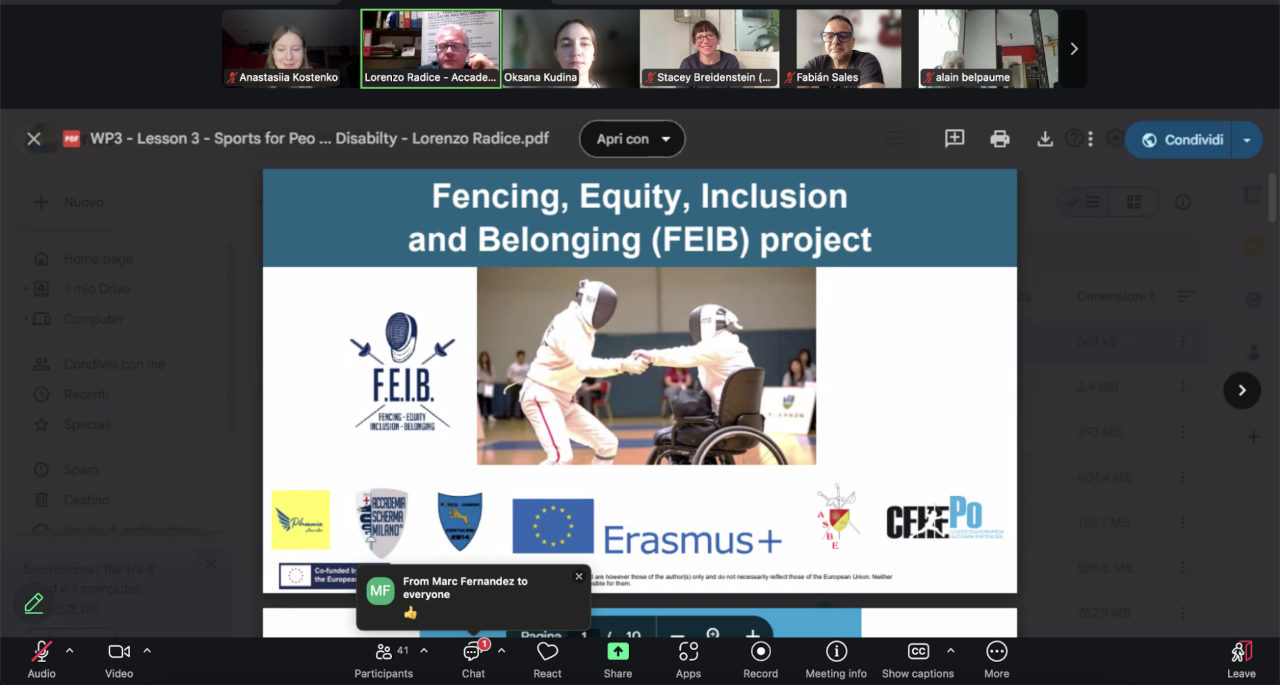
Nowadays, sport is increasingly recognized not only as a tool for physical development, but also as a powerful driver of social inclusion. This idea lies at the heart of the international project Fencing: Equity, Inclusion and Belonging (F.E.I.B.), which aims to create equal opportunities in sport for people with and without disabilities. One of the project’s key achievements is the development of an online training course for sports operators, introducing innovative approaches to inclusive fencing activities.
As part of the project, a five-day online training course titled “Creating inclusive activities for people with and without disabilities through the example of fencing” was developed and delivered. The course was designed for fencers, coaches, professionals working with people with disabilities in sport and physical activity, as well as representatives of NGOs active in the field of social inclusion.
A total of 72 participants registered for the training. The course combined theoretical input, practical video demonstrations, and interactive discussions, enabling participants not only to acquire knowledge but also to reflect on its practical application.
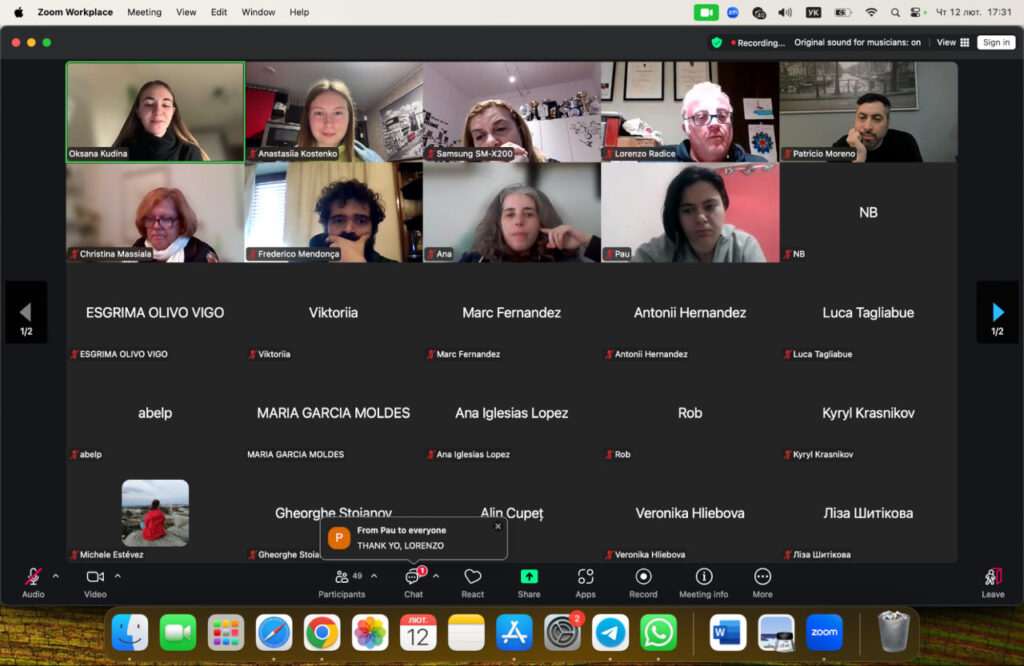
The course aimed to promote inclusive practices in fencing by equipping participants with knowledge, tools, and methodologies to engage people with and without disabilities in shared sports environments. A key focus of the course was the application of the V.A.P.E.P. methodology as an innovative approach to inclusive fencing.
The training programme covered:
- the fundamentals of fencing, including rules, safety guidelines, and equipment;
- adapted coaching techniques and training methodologies;
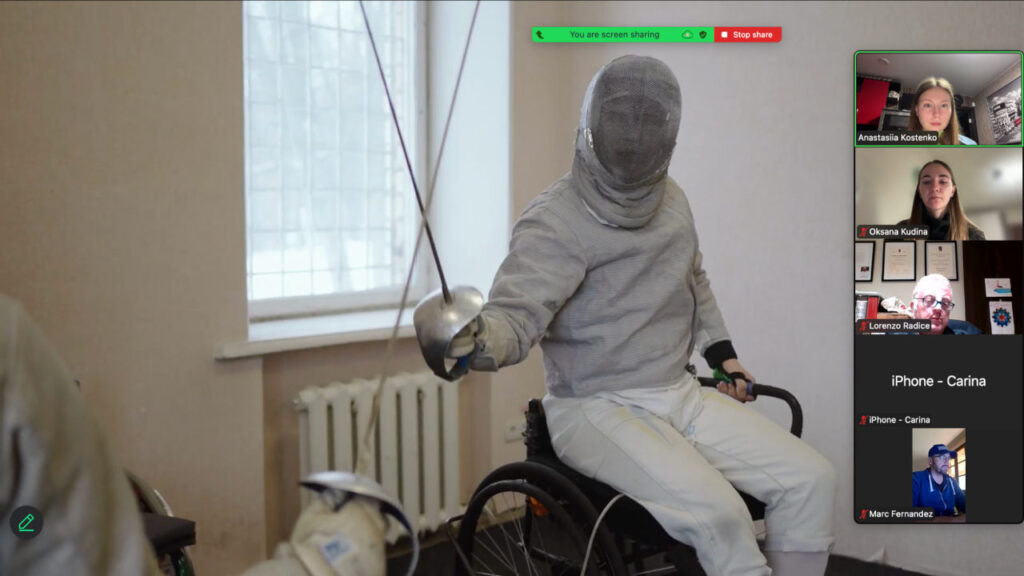
- wheelchair fencing;
- approaches to working with athletes with visual impairments;
- strategies for engaging participants with cognitive disabilities.
Particular emphasis was placed on the VAPEP methodology, which provides a structured framework for adapting sports activities to the diverse needs of participants and ensures meaningful and inclusive participation for all.
Participants gained:
- practical tools for delivering inclusive fencing sessions;
- a deeper understanding of accessibility and inclusion in sport;
- enhanced communication skills for working with diverse groups;
- valuable experience in international collaboration and exchange of best practices.
Next Steps: Local Implementation
Following the completion of the online course, the project moves into its practical implementation phase. Each partner organization will host a series of Open Days, providing an opportunity to test and apply the acquired knowledge in real-life settings.
Sport That Brings People Together
Within the F.E.I.B. project, fencing becomes more than just a sport — it becomes a platform for dialogue, mutual understanding, and social connection. Through innovative methodologies and international cooperation, the project demonstrates that inclusion is not a challenge to overcome, but an opportunity to build stronger, more cohesive communities.